10 Things NDIS Community Nursing Actually Covers (Wound Care, Medication, Catheter Care & More)
By Care Steps Australia
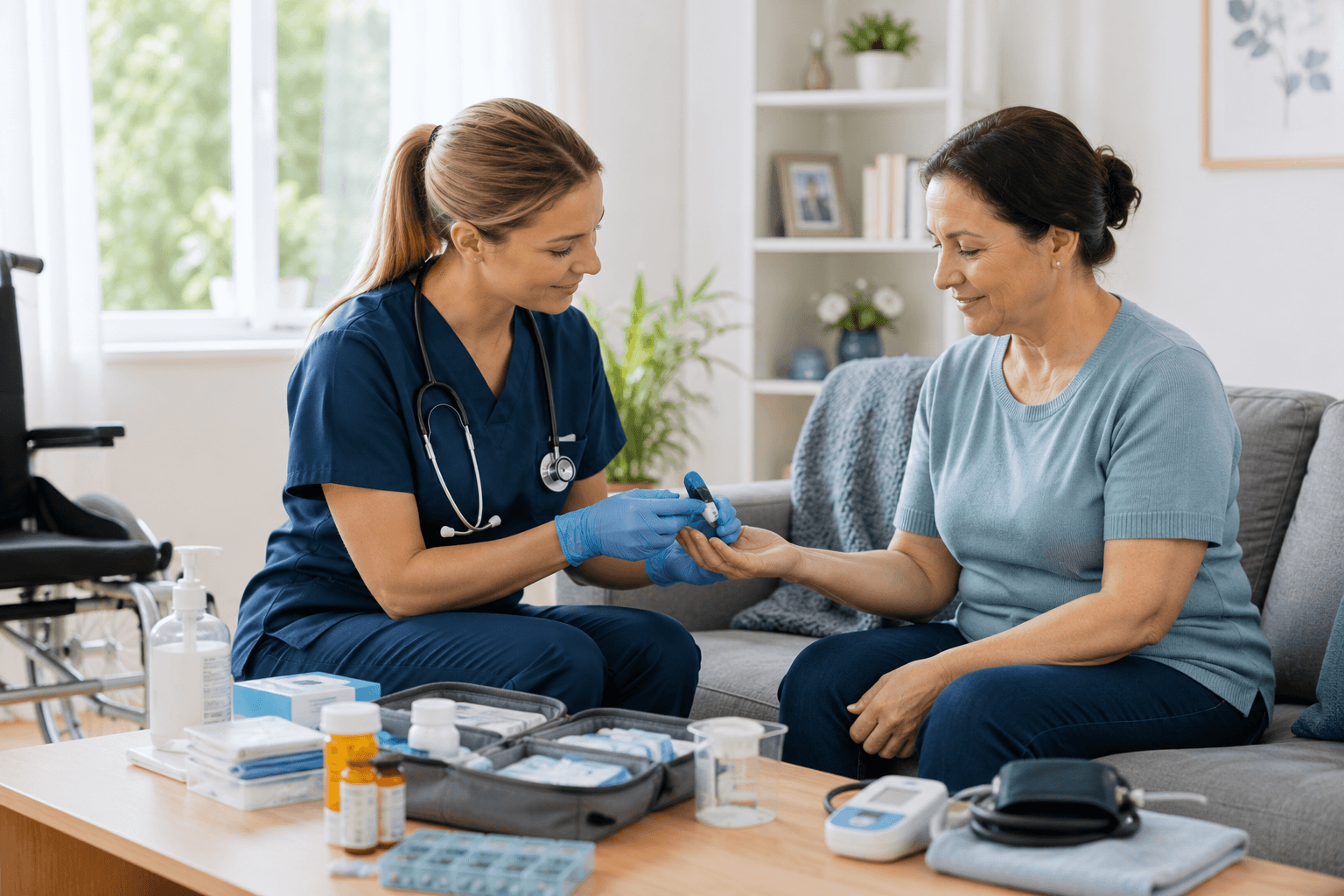
NDIS community nursing covers more than most families expect. Beyond routine wound care and medication support, it can stretch to tracheostomy care, enteral feeding, bowel management, and even training a family member to manage a condition independently. Here are the 10 areas it can cover, what each actually looks like in practice, and who typically needs it.
Key Takeaways
- Community nursing under the NDIS spans 10 distinct areas, from everyday wound care through to high-intensity supports like tracheostomy management.
- Not every provider delivers every item on this list, always confirm directly what a provider is equipped to support.
- Family and carer training is a genuine, fundable category on its own, separate from hands-on clinical tasks.
- Some of these items, like tracheostomy care, are formally classified by the NDIS as High Intensity Daily Personal Activities and require specific clinical competency.
- New to this topic? Start with our plain-English guide to NDIS community nursing care first, then come back here for the full service breakdown.
New to this topic? Start here
If you are still working out what NDIS community nursing actually is, how it differs from support work, and how it gets funded, our plain-English guide to NDIS community nursing care covers that ground first. This guide picks up from there and goes deep on the 10 specific areas a community nurse can cover, one at a time.
1. Wound Care and Dressing Changes
In practice, this means a nurse assessing a wound, whether it's a surgical site, a pressure injury, or a chronic ulcer, cleaning it properly, applying a sterile dressing, and checking for early signs of infection at every visit. Progress gets documented visit to visit, so any change in healing is caught quickly rather than discovered weeks later. This is typically needed by anyone with a wound connected to their disability that requires more than a basic bandage change, particularly wounds that are slow to heal or at risk of infection.

2. Medication Management
This spans a wide range, from a nurse checking that a complex medication routine is being followed correctly, through to actually administering medications, including injections and subcutaneous injections, and monitoring for side effects afterward. Families often need this when a participant is on multiple medications, when timing and dosage matter for safety, or when a new medication has just been introduced and needs close monitoring in the first few weeks.
3. Catheter, Stoma, and Continence Care
A nurse manages indwelling catheters, stoma care, and broader continence needs with a focus on dignity, infection prevention, and comfort. This typically means routine catheter changes and checks, stoma site care, and helping a participant and their family manage day-to-day continence needs without unnecessary trips to a clinic. Anyone with a permanent or long-term catheter, stoma, or significant continence need generally requires this as an ongoing, scheduled service rather than a one-off visit.
4. Bowel Management
This is often folded into general "continence care" elsewhere, but it's genuinely its own area. Bowel management can include monitoring and supporting a structured bowel program, managing complex bowel care needs, and adjusting the approach as a participant's condition changes. This matters most for participants with spinal cord injuries, neurological conditions, or other conditions that affect bowel function, where an unmanaged issue can lead to hospital admission if left unaddressed.
5. Chronic Condition Monitoring
For conditions like diabetes, epilepsy, or a respiratory condition connected to a participant's disability, a nurse provides regular monitoring, teaches self-management skills where appropriate, and watches for warning signs before they become emergencies. In practice this looks like scheduled check-ins to review symptoms, medication effectiveness, and any changes since the last visit. This is generally ongoing rather than a single appointment, since the value comes from consistent monitoring over time.
6. Respiratory Support and Tracheostomy Care
Tracheostomy care is formally classified by the NDIS as a High Intensity Daily Personal Activity, meaning it must be delivered by a registered nurse with specific clinical training and a documented competency assessment, not general support staff. In practice, this covers tracheostomy maintenance and suctioning, monitoring for complications, and broader respiratory support such as oxygen therapy where it's part of a participant's plan. This is needed by participants with a tracheostomy or another complex respiratory need, and because of its high-intensity classification, it's worth confirming directly whether a provider's nurses hold the specific competency for it before assuming it's covered.
7. Enteral and PEG Feeding Support
This covers managing a PEG (percutaneous endoscopic gastrostomy) tube or nasogastric tube, including feeding administration, monitoring for complications like blockages or site irritation, and troubleshooting if something isn't working as expected. Participants who receive some or all of their nutrition through a feeding tube need this as a regular, scheduled part of their care rather than an occasional check-in.
8. Dysphagia (Swallowing) Support
For participants with swallowing difficulties, a nurse works alongside a speech pathologist where one is involved, supporting safe eating and drinking strategies day to day and watching for signs of aspiration risk. This is relevant for participants with neurological conditions, post-stroke recovery, or other conditions affecting swallowing, and it often overlaps with feeding support if a participant also uses a feeding tube for some or all of their nutrition.
9. Palliative and Post-Surgical Nursing Support
Palliative nursing focuses on comfort, symptom management, and quality of life rather than active treatment, while post-surgical nursing support helps a participant recover safely at home after a hospital discharge, monitoring the surgical site and catching complications early. Both are typically short-to-medium term intensifications of care rather than an ongoing weekly service, stepped up around a specific period of need.
10. Training and Capacity-Building for Families and Carers
This is a genuinely separate category from the hands-on clinical tasks above. Instead of a nurse doing a task themselves, this involves a nurse teaching a family member or carer how to safely manage a specific clinical task independently, whether that's a medication routine, a basic dressing change, or recognizing early warning signs of a condition worsening. According to the NDIS's official pricing arrangements, which set out maximum prices for all NDIS supports, this kind of training is its own distinct, fundable support item, separate from direct nursing care. This is worth asking about specifically if your family wants to build confidence managing day-to-day needs rather than relying on a nurse for every instance of a task.
Does Your NDIS Plan Already Cover These?
Not every plan automatically includes all 10 of these areas, and it's worth checking rather than assuming. Start with your plan document itself, if you're plan-managed, your plan manager can also confirm what's currently funded and under which budget category. If a specific area, like tracheostomy care or carer training, isn't currently included but your family member has a genuine, disability-related need for it, your support coordinator or Local Area Coordinator can help you request a plan review with supporting evidence from a GP or specialist. Providers overseen by the NDIS Quality and Safeguards Commission are required to meet registration and conduct standards for exactly this kind of clinical support, so it's reasonable to ask any provider directly which of these 10 areas they're registered and equipped to deliver.
A Note for Sydney South West Families
Families in Punchbowl, Bankstown, and the wider Canterbury Bankstown area often want the same thing regardless of which of these 10 areas applies to them: proper clinical care delivered locally, without unnecessary trips into the city. Language and cultural fit matter here too, and it's a reasonable request to ask a provider whether they can match a nurse who communicates in your family's language. Our plain-English guide to NDIS community nursing care covers this in more depth if it's a priority for your family.
Simple Checks Before You Enquire
- Write down which of these 10 areas actually apply to your family member's situation, this makes the first conversation with a provider much faster.
- Gather any relevant GP or specialist letters if you think a plan review might be needed.
- Check your current NDIS plan document to see what's already funded before assuming something isn't covered.
About this guide
This guide was written by Merina Suwal, Director and Clinical Services Specialist at Care Steps Australia, who brings more than 10 years of clinical nursing experience across residential aged care and home care settings. This guide also draws on publicly available NDIS pricing arrangements and NDIS Quality and Safeguards Commission provider standards. Last updated July 28, 2026.
Get in Touch
Care Steps Australia
48 Lancaster Avenue, Punchbowl, NSW 2196
Phone: (02) 8201 3100
Email: info@carestepsaustralia.com.au
Not sure which of these 10 areas applies to your family member? Submit a service enquiry or explore the full range of NDIS supports we provide across Punchbowl and Sydney's south west.
Frequently Asked Questions About NDIS Community Care Nursing
Yes, but it's classified as a High Intensity Daily Personal Activity, meaning it must be delivered by a nurse with specific clinical training and a documented competency assessment. Confirm directly with a provider that their nursing staff hold this specific competency.
No, it's a related but separate, fundable category. Instead of a nurse performing the task, they teach a family member or carer to safely manage it independently over time.
Yes, PEG and nasogastric feeding support and dysphagia (swallowing) support are both covered areas, and they often overlap for participants who use a feeding tube for some or all of their nutrition.
It's related but often needs its own attention, particularly for participants with spinal cord injuries or neurological conditions, where a structured bowel program requires specific, ongoing nursing input rather than general continence support alone.
Check your plan document first. If you're plan-managed, your plan manager can confirm your current funded categories. If something you need isn't included, a support coordinator can help you request a plan review with supporting evidence.
No. Some areas, especially tracheostomy care and complex bowel management, require specific clinical competency that not every provider's nursing team holds. Always confirm directly which of these areas a provider is equipped to support before assuming.
Related service
Clinical & community nursing →Our registered nurses provide wound care, medication support and health monitoring at home.
Request a call back
Tell us a little about the support you need and our team will call you back during business hours. Prefer to talk now? Call 02 8201 3100.


Led by Rosy Thapa (Aged Care Specialist) & Merina Suwal (Clinical Services Specialist), each with 10+ years in aged care and clinical nursing.
- ✓ Registered NDIS provider - approved to Aug 2028 (verify)
- ✓ Registered aged care provider
- ★ 5.0 Google rating - read our reviews